



After a sudden death, families need time to grieve. But the law does not wait forever. Florida sets firm deadlines for filing wrongful death lawsuits. If a claim is filed too late, a court can dismiss it, no matter how strong it is. Knowing the wrongful death statute of limitations Florida uses helps families protect their rights. Padron & Lopez-Trigo can help families understand these deadlines and how they may apply to a wrongful death claim.

Key Takeaways
- Knowing the wrongful death statute of limitations Florida uses helps families protect their rights.
- A statute of limitations is a law that sets the time limit to file a lawsuit.
- Under section 95.11 of the Florida Statutes, a wrongful death action generally must be filed within two years.
- If a government agency or employee may be at fault, special rules apply.
- In rare situations, a deadline may be paused or extended under Florida law.
What Is a Statute of Limitations?
A statute of limitations is a legal deadline for filing a lawsuit. If the required time period expires, you may lose the right to bring the claim. These deadlines help ensure cases are filed while evidence is still available and witness memories remain reliable.
How Long Do You Have in Florida?
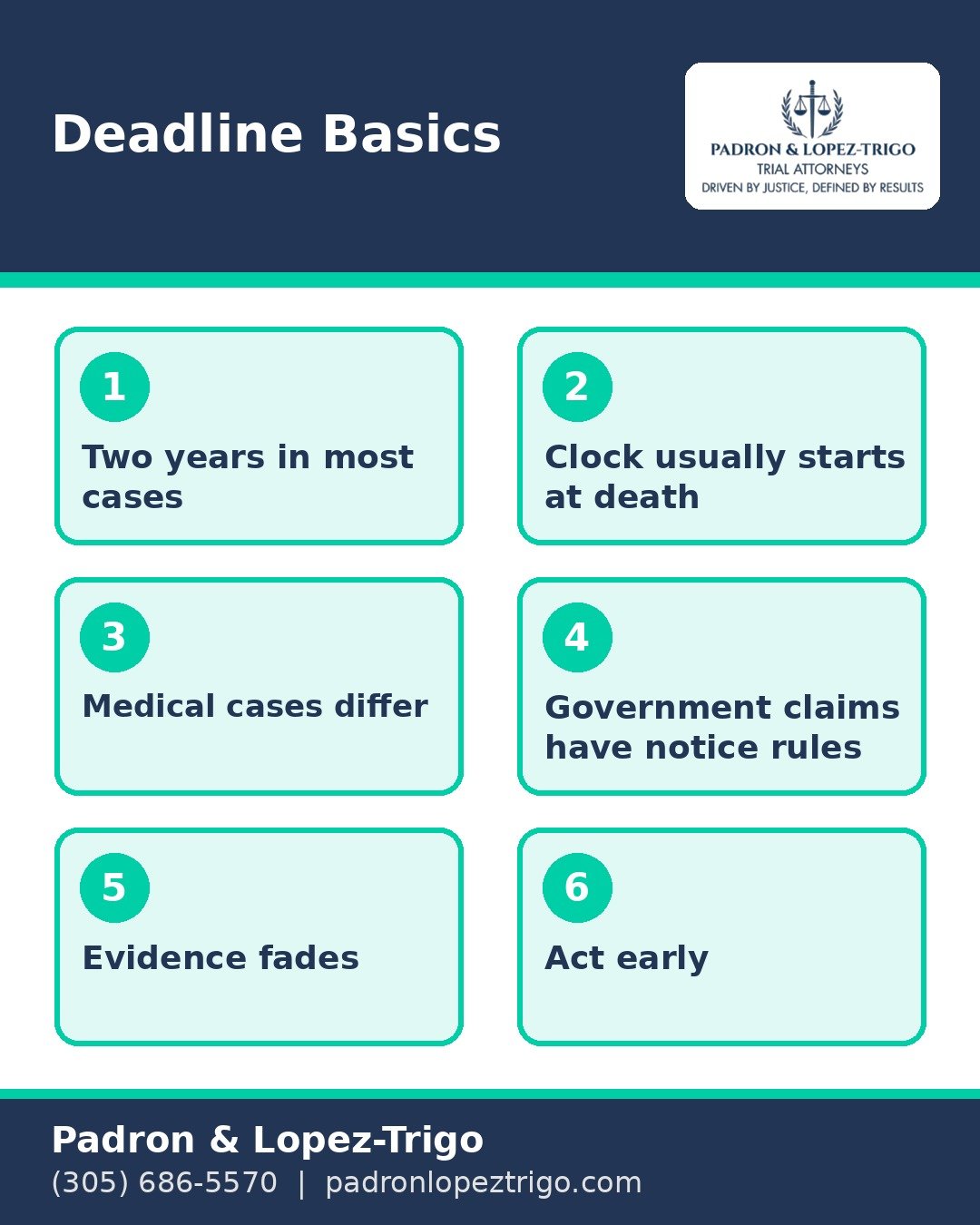
Under section 95.11 of the Florida Statutes, a wrongful death action generally must be filed within two years. In most cases, the clock starts on the date of death, not the date of the accident. For example, if a person was injured in a crash and died weeks later, the two years usually start on the date of death.
Did the 2023 Law Change Affect Wrongful Death?
Florida enacted HB 837 in March 2023, reducing the statute of limitations for general negligence claims from four years to two years. Wrongful death claims were already subject to a two-year deadline, so that filing period did not change. However, the law also revised how fault is determined, which may still affect wrongful death cases.
Are Medical Negligence Cases Different?
Yes. Wrongful death cases involving medical negligence follow different rules. In general, Florida law requires medical malpractice claims to be filed within two years from the date the incident or death was discovered, or reasonably should have been discovered. These cases may also be subject to additional time limits, along with required pre-suit investigation and notice procedures. Because these steps can take time, families should speak with a lawyer as early as possible.

What About Claims Against the Government?
If a government agency or employee may be at fault, special rules apply. Florida law requires written notice of the claim to the agency and, in many cases, to the Department of Financial Services before a lawsuit is filed. The time limits for these claims can differ from regular cases. Missing a notice step can hurt a claim.
Can the Deadline Be Paused?
In rare situations, a deadline may be paused or extended under Florida law. These exceptions are narrow and fact-specific. Families should never rely on an exception without legal advice.
Why Should You Act Before the Deadline?
Even with two years, waiting can hurt a case. Evidence can be lost. Witnesses move or forget. Video footage may be erased. Vehicles may be repaired or scrapped. A personal representative must also be appointed before the case can be filed, and that takes time.
| Situation | General deadline rule |
|---|---|
| Most wrongful death cases | Two years, usually from the date of death |
| Medical negligence deaths | Two years from discovery, with outer limits and pre-suit steps |
| Claims against government | Written notice rules and different time limits |
| Exceptions | Narrow and fact-specific |
What Steps Should Families Take Now?
- Write down the date of death.
- Get copies of police, incident or medical reports.
- Keep bills and records in one place.
- Ask about opening an estate and naming a personal representative.
- Talk with a lawyer about the deadline in your case.
How Can a Lawyer Help?
A lawyer can identify the right deadline, preserve evidence and handle notice steps. A lawyer can also help with the probate process to appoint a personal representative. Learn more about our wrongful death practice.
A Simple Timeline to Keep in Mind
In the first few weeks, families often need time to focus on grieving and immediate responsibilities. When you are ready, begin gathering important documents and consider speaking with a lawyer. The next step may involve opening the estate so a personal representative can be appointed. From there, your lawyer can begin collecting evidence and preparing the claim. Each stage takes time, which is why starting early can help reduce pressure later.
A Quick Deadline Checklist
Start by writing down the date of death and counting two years from that date. Mark the deadline on a calendar so it is easy to track. If a doctor or hospital was involved, ask whether medical negligence rules may apply. If a city, county, state agency, or government vehicle was involved, ask about any special notice requirements. Do not wait for an insurance company to contact you, and do not assume settlement discussions will pause the filing deadline. Acting early gives your lawyer more time to investigate and preserve important evidence.
Keep Your Papers Safe
As you move through the process, keep important records in one secure place. This includes the death certificate, police report, medical records, insurance documents, and any other paperwork related to the incident.
Questions to Ask a Lawyer
Who should file the claim?
When does the deadline begin?
Does a special rule apply to my case?
Do we need to provide notice to anyone?
What evidence should we preserve now?
Common Mistakes to Avoid
Families can also protect their rights by avoiding a few common mistakes:
Counting from the accident date instead of the date of death
Assuming insurance negotiations pause the deadline
Overlooking notice requirements for government claims
Waiting until the final months before taking action
Protect Your Family’s Rights
The wrongful death statute of limitations Florida sets is strict. Padron & Lopez-Trigo, P.A. focuses on personal injury and wrongful death cases. Our attorneys are former Miami prosecutors who prepare each case for trial. If you have questions after losing a loved one or suffering an injury, call Padron & Lopez-Trigo, P.A. at (305) 686-5570 or contact us online for a free case evaluation.
This article is general information about Florida law and is not legal advice. Reading it does not create an attorney-client relationship. Every case is different, and laws change. The hiring of a lawyer is an important decision that should not be based solely upon advertisements.
Frequently Asked Questions
Q: How long do you have to file a wrongful death lawsuit in Florida?
A: Generally two years, usually from the date of death.
Q: Did the 2023 tort reform change the wrongful death deadline?
A: No. Wrongful death already had a two-year limit.
Q: Are medical malpractice deaths different?
A: Yes. They have discovery rules, outer limits and pre-suit steps.
Q: Do insurance negotiations pause the deadline?
A: Generally no. Talks with insurers do not stop the clock.
Q: What if a government agency is at fault?
A: Special written notice rules and time limits apply.