



Some injuries heal in weeks. Others change how a person moves, works, and lives at home. A catastrophic injury claim Florida families face after a serious crash or a major fall is about that second group of injuries. As Padron & Lopez-Trigo, P.A. explains, Florida law does not turn every severe injury into a special category with a set payout. The case must show the harm. It must also show the care that will be needed, and who is legally responsible.
Key Takeaways
- A catastrophic injury claim in Florida often involves lasting limits on work, mobility, or independent living.
- The claim may include future medical care, changes to a home or vehicle, and lost earning capacity, if the proof supports those losses.
- Fault still matters under Florida’s modified comparative negligence rule.
- These cases usually need careful medical records and a clear picture of daily life. The first hospital chart is only the start.
- Many negligence claims must be filed within two years, and evidence should be saved early.
What Do People Mean by a Catastrophic Injury?
People use the phrase for injuries that permanently change daily life. Traumatic brain injuries, spinal cord injuries, amputations, and severe burns are common examples. So are injuries that leave a person unable to work or unable to live safely without help. We use those examples as descriptions. They are not a closed legal list.
The first hospital visit is only the start. Surgery, rehab, therapy, and medications can all become part of the story. Later complications can, too. A person may need help with dressing, transportation, or supervision. A home may need ramps or a bathroom change. It may need a different bed. A vehicle may need equipment to be usable again. Those needs have to be documented. Do not guess at them.
Our catastrophic injuries page describes how we approach this kind of work. Related cases can arise from auto accidents or from unsafe property.
What Losses May Be Part of the Claim?
A catastrophic injury claim Florida families bring is still a personal injury claim at heart. Economic losses can include past medical care and the care a doctor says will be needed later. They can also include lost wages. Lost earning capacity may apply if the person cannot return to the same work, or to any work. The cost of help at home may be part of the economic picture when the proof supports it. So can reasonable changes to a home or vehicle.
Noneconomic losses may include pain and scarring. They may also include the loss of activities the person used to do. A spouse may have a related consortium claim in some cases. We will not attach figures to any of those categories here. The proof in the file, and the law that applies, control what can be sought.
Punitive damages are not a standard item. Florida law requires a special showing before a punitive claim may even be added to the case. Most cases stay focused on the care and the losses caused by the injury.
How Does Fault Affect a Serious Injury Case?
Even a life-changing injury is subject to Florida’s fault rules. Under section 768.81, a claimant’s share of fault can reduce the recovery. If the claimant is found more than 50 percent at fault for their own harm, they may recover nothing in many negligence cases. That rule makes early evidence important. Photos, witnesses, vehicle data, and the first medical history can all be used later in a fault debate.
In a crash, the other side may argue speed or distraction. They may also argue a failure to wear a belt. In a premises case, they may argue that a hazard was open and obvious. They may also argue that the injured person was not watching. Those arguments have to be tested against the facts. Do not accept them just because they are raised early.
What Proof Helps in These Cases?
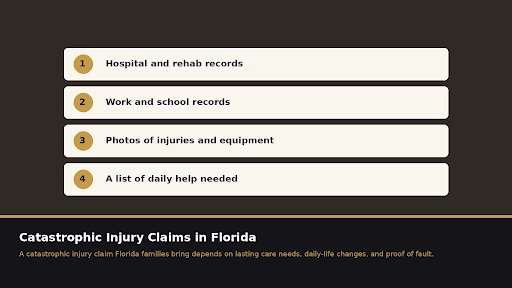
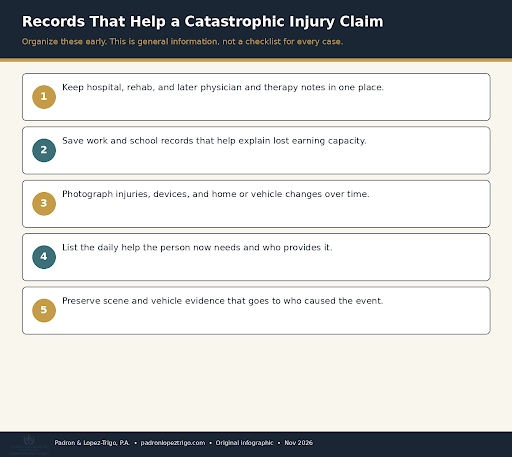
Record or item | Why it can matter |
Hospital and rehab records | Show the diagnosis, the treatment, and early limits |
Later physician and therapy notes | Show whether the limits lasted or got worse |
Work and school records | Help explain lost earning capacity or a lost career path |
Photos of injuries and equipment | Show scarring, devices, and home changes over time |
A list of daily help | Shows what the person can no longer do alone |
Scene and vehicle evidence | Goes to who caused the event |
Family members often become informal caregivers. Notes about appointments, sleepless nights, and new routines can help a lawyer understand the real impact. Official records still matter most. Keep bills, insurance letters, and calendars of missed work.
If a case is filed, the catastrophic injury claim Florida courts will later see has to be organized. These files are large. Starting early makes the work easier to manage.
What Should You Do After a Life-Changing Injury?
Follow medical advice and keep every appointment you can. If you cannot attend, tell the doctor’s office and document why. Ask a trusted person to help you keep records in one place. Be careful about recorded statements to insurers. Be careful on social media too. A short video can be used to argue that you can do more than your doctors say.
Deadlines still apply. Many Florida negligence claims must be filed within two years. Some cases have different rules. Our post on Florida personal injury deadlines is a useful overview. If the injury later results in death, the case may shift toward a wrongful death claim, which has its own rules.
Talk With a Florida Personal Injury Lawyer
A catastrophic injury claim Florida families consider after a serious event is hard to sort out during treatment. Padron & Lopez-Trigo, P.A. focuses on personal injury and wrongful death cases. Our attorneys began their careers as Miami prosecutors. If you have questions about a serious injury, call us at (305) 686-5570 or contact us for a free case evaluation.
This article is general information about Florida law and is not legal advice. Reading it does not create an attorney-client relationship. Every case is different, and laws change. The hiring of a lawyer is an important decision that should not be based solely upon advertisements. This post is flagged for attorney review.
Frequently Asked Questions
Q: Is there one legal definition of a catastrophic injury in every Florida case?
A: No single definition covers every civil claim. The phrase is often used for injuries that permanently change daily life. The records in your case matter more than the label.
Q: What is usually at stake in a catastrophic injury claim Florida families bring?
A: Future care, lost earning capacity, and lasting changes in daily life are often part of the analysis, along with the fault that caused the event. The proof controls what can be sought.
Q: Can my own fault reduce or bar the claim?
A: Yes. In many negligence cases, a share of fault reduces the recovery, and a share greater than 50 percent can bar it.
Q: How long do I have to file?
A: Many Florida negligence claims must be filed within two years. Some cases have different rules, so it is wise to get advice early.
Q: Should I sign early insurance papers so treatment can start?
A: Get the care you need, but do not sign a release or give a recorded statement before you understand what you are signing. You can ask a lawyer to review it first.